
European building materials
for construction companies
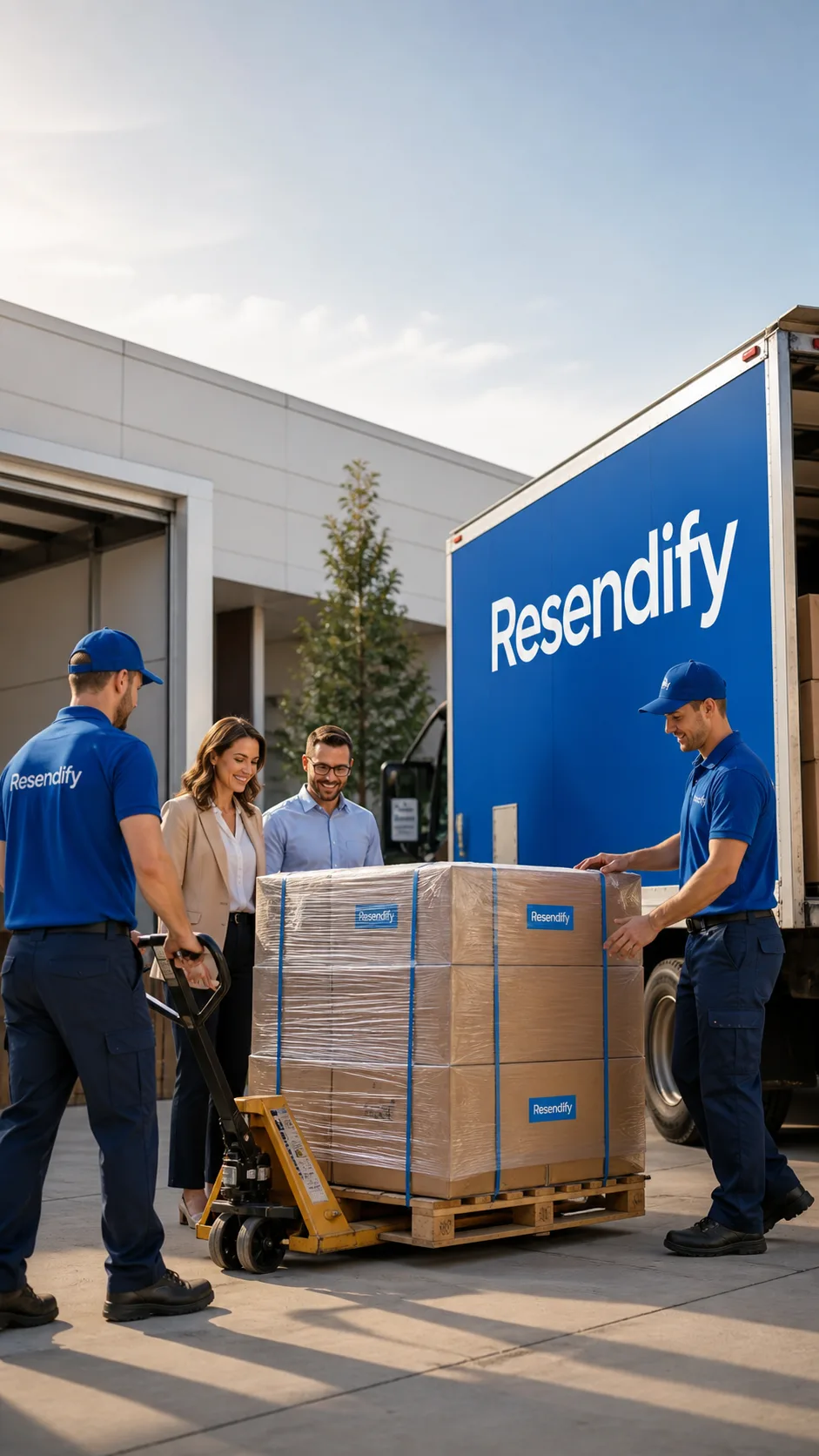
Castellón and Sassuolo ceramics, HPL and compact laminate, German fixings and documented technical product — sold online at the prices European contractors pay, and carrying the CE Declaration of Performance that lets the product travel. We receive from your suppliers in ten countries, consolidate onto pallets and produce the export paperwork your customs broker files from.
Estimate a shipment before you talk to us
Price a real weight and volume, then send us the details for a commercial quote.
Quote reply: within 24 business hours from Spain and Italy, up to 3 business days from our other countries.
The European price list is public. Getting it to your site is the part nobody sells.
Suppliers sell ex-works, not export
The factories and distributors with the best ranges run excellent online shops for domestic delivery — and no export desk for a one-pallet order from a foreign contractor. The price list is public; the logistics to your country is the product nobody offers.
Many suppliers, one site deadline
A single project draws on a tile factory, a fixings distributor and a panel supplier, each shipping on its own schedule. Run as separate international deliveries, the slowest supplier sets the pace of your whole programme — and a site programme does not renegotiate itself.
Loose parcels burn the saving
Building materials are dense. Shipped parcel by parcel, freight eats whatever the European price saved; consolidated onto one properly packed pallet with the documentation done once, the same order starts to close commercially. Format is the real decision, not brand.
From our warehouses worldwide to your doorstep — in four moves.
Resendify gives you a real local address at our warehouses. Shop where the deals are, we collect, repack and forward — you stay in control the whole way.
- Sign up
Get your local address
Pick one of our warehouses in 10 countries across Europe, the US and Asia. We assign you a real street address — yours within minutes.
Ready in 2 minutes - Shop
Buy from any store
Use your Resendify address at checkout — Amazon DE, Zara, Decathlon, eBay, anywhere. Even sellers that don't ship abroad.
Works with 10k+ shops - Consolidate
We receive and forward
Photos on arrival, optional repacking, and consolidation of multiple orders into one shipment to save up to 70%.
Up to 70% off shipping - Ship
Worldwide to your door
Pick your courier and track door-to-door. Email alerts on every tracking update.
Live email alerts
Warehouses and receiving points across key global markets
We can receive your packages in multiple strategic countries, giving you access to stores, suppliers and marketplaces that would otherwise be hard to reach internationally.
European suppliers construction companies buy from
Where construction companies buy in Europe — and the case we publish
The map is concentrated. Spain and Italy own ceramics: the Castellón cluster and the Sassuolo district are where the tile the rest of the world specifies is actually made, and their home markets carry the full ranges, trims and current-year series. Spain is also a strong buy for HPL and compact laminate through specialist distributors, and for sanitaryware and architectural hardware.
Germany is the reference for technical product — fixings and anchoring systems, sealants, tapes and profiles that arrive with proper documentation. The Netherlands and Belgium matter as panel distribution hubs where board stock physically sits, and the Czech Republic sells the same EU-standard product a notch below Western European prices.
Whatever you buy, ask the supplier for the CE Declaration of Performance (DoP) under the Construction Products Regulation and the technical data sheet while the order is open — your architect, your customs broker and your local approval process will all want them, and they cost nothing to request.
This is not theory: we publish a real construction-materials operation on this site. A client moved 150 HPL panels of 8 mm — 296 kg on a single 120×80×50 cm pallet, €2,340.29 of declared merchandise and €3,111.75 in all-in logistics, which works out to roughly ≈€10.5/kg. Read that figure honestly: it was a one-off operation, and the working reference for loads above 200 kg is below €15/kg, varying with route, volume and season. Every shipment is quoted individually.
- Spain: Castellón ceramic cluster, HPL and compact laminate distributors, sanitaryware and hardware
- Italy: Sassuolo porcelain and stone, taps, lighting and architectural finishes
- Germany: fixings and anchoring systems, sealants, profiles and documented technical product
- Netherlands / Belgium: panel hubs with real warehouse stock; Czech Republic: EU standard, sharper prices
- Always request the CE Declaration of Performance (DoP) and data sheet while the order is open
- Published case: one pallet of HPL at commercial scale — real, itemised figures, not projections
Sourcing regions and the published case reviewed August 2026 — not commercial or customs advice. We are not a distributor or an authorised reseller for any manufacturer, we hold no stock, and case figures describe one real operation, not a general tariff; every shipment is quoted individually.
The honest part: codes, lots and what cannot fly
Start with what we cannot smooth over. CE marking under the EU Construction Products Regulation is European conformity — what you may install or resell is decided by your local rules: the ICC/ASTM ecosystem in the United States, NOM in Mexico, ABNT and INMETRO in Brazil, the NCC and WaterMark scheme for wet products in Australia.
The European DoP is strong supporting evidence, but local approval is your side of the line; confirm it before committing volume. Ceramics add a second constraint: tile and decorative panels vary by production lot in shade and calibre, so order the full quantity from one lot and add roughly ten percent overage for cuts and breakage — topping up later from a different batch rarely matches.
And some of what a site orders simply cannot board a plane: solvent-based adhesives, sealants, aerosols and certain coatings are dangerous goods in air freight. Tell us what is in the order before you buy, not after.
The mechanics on our side are built for exactly this cargo. Reception at the warehouse includes checking the delivery against your order and photographing what arrived, so you decide with evidence in front of you before anything is dispatched — a cracked corner caught at origin is a supplier claim; discovered at destination, it is your cost.
Wood packaging for the international leg is ISPM-15 heat-treated, stone and large-format material get edge protection or crating, and anything electrical is built for 230 V / 50 Hz — plan transformers or local drivers if your market runs 110–127 V. Dense product rewards consolidation: several suppliers onto one pallet is where the freight economics start to work.
- CE under the CPR is European conformity — local install or resale may need ICC/ASTM (US), NOM (MX), ABNT/INMETRO (BR) or NCC/WaterMark (AU) evidence
- Ceramics vary by lot: buy the full quantity from one batch and add ~10% overage
- Solvent adhesives, sealants, aerosols and some coatings are dangerous goods in air freight — ask us before ordering
- Wood packaging travels ISPM-15 heat-treated; stone and large formats get crating and edge protection
- Electrical product is 230 V / 50 Hz — a real constraint in 110–127 V markets
- Reception with photos before dispatch: origin claims are the supplier's problem, destination discoveries are yours
General technical and regulatory guidance, reviewed August 2026 — not certification, engineering or customs advice. Dangerous-goods handling depends on the specific product and carrier; building-code requirements depend on your project and jurisdiction.
What Resendify does for a business, and what it does not
Being precise about the boundary is more useful than a list of promises. We operate receiving warehouses across ten countries — Spain, Italy, France, Germany, the United Kingdom, Türkiye, the Czech Republic, the United States, China and Hong Kong — so your suppliers deliver domestically, which is what most of them are set up to do.
We check goods in, store them while an order builds across several suppliers, repack when the original packaging is not built for an international leg, consolidate into one shipment, and produce the export documentation: commercial invoice, packing list, real weights and dimensions, and the supplier origin documents that decide whether you pay a preferential duty rate or a full one.
What we are not is your customs broker in the destination country, a distributor, or a party to your trade terms. We do not clear goods on your behalf at destination, we do not hold stock we sell you, and we do not negotiate or guarantee terms with brands.
We also do not quote transit times we cannot control, and we do not tell you your goods will clear without charges. The Business plan exists precisely because a recurring importer needs a quote-based setup rather than a consumer membership: tailored workflows for repeat imports, room for packaging and repacking, volume-oriented planning and commercial support on request.
- Receiving warehouses in 10 countries so suppliers deliver domestically
- Check-in, storage while an order builds, and repacking for the international leg
- Consolidation into one shipment with commercial invoice, packing list, weights and dimensions
- We chase supplier origin declarations — the document that decides preferential duty
- We are not your destination customs broker, not a distributor, and not a party to your trade terms
- Business plan is quote-based: tailored workflows for repeat imports, volume-oriented planning
Importing European materials for construction: what companies ask
A single pallet is exactly the format we work in — the HPL case published on this site is one pallet, consolidated, documented and quoted individually. We receive from one or several suppliers, palletize with edge protection, and prepare the commercial invoice, packing list and real weights and dimensions. Containers and repeating schedules are a Business plan conversation: tell us your volumes.
Yes. Reception at the warehouse includes checking each delivery against your order and photographing what arrived, and you decide with the evidence in front of you before anything is dispatched. For building materials this is the highest-value step we offer: a wrong lot number or a cracked corner caught at origin is a supplier claim; the same defect discovered on site is your cost and your delay.
A rate card would not be honest: quotes are built per shipment from real weight, volume and route. What we can give you is calibration from published cases. An HPL pallet came out around ≈€10.5/kg all-in — a one-off operation; the working reference for loads over 200 kg is below €15/kg. And a 317 kg Zara Home operation for a Monterrey developer landed at ≈€13/kg, the bottom of the ~€13–18/kg reference band, helped by volume and a one-off carrier rate. Route, volume and season move all of these. You can start on the 14-day trial with a first order; recurring volumes belong on the quote-based Business plan.
Air freight is charged on chargeable weight: the higher of the real weight and the volumetric weight, which in air cargo is usually length × width × height in cm divided by 6,000 (about 167 kg per cubic metre). A light but bulky pallet pays for its volume. Pickup, consolidation, palletizing, export paperwork and the route itself come on top. We don't publish a rate card because it moves with route and date: enter real weights and measures in the quoter and a person prices that exact load.
A parcel-forwarding address — what Latin America calls a casillero — receives personal purchases and forwards them by courier as parcels: built for individuals and occasional orders. Consolidated cargo gathers orders from one or several suppliers into a single commercial shipment, with an invoice, a packing list and a formal import at destination. Resendify does both, but they are different services: if you buy for resale or for a project, consolidated cargo is the one for you.
We are a forwarder and consolidator with warehouses in ten countries: we receive your suppliers' goods, consolidate and palletize them, prepare the commercial invoice and packing list, and quote the air freight to your country. What we don't do is customs clearance at destination: that entry is filed by your local customs broker, who holds the licence there.
Volume and rhythm change what you need. A consumer account is built around occasional parcels; a business buying every month needs storage that fits a build-up across suppliers, packing decisions made per shipment, documentation that a customs agent can file without chasing you, and a quote rather than a fixed membership. That is what the Business plan is for, and it is priced per case because a pallet of tools every month and a monthly box of collectibles are not the same operation.
No. Clearance at destination is done by you or your customs broker, and that is deliberate: local clearance requires local licensing and local liability. What we do is the European side and the paperwork that makes clearance straightforward — a consolidated shipment, a commercial invoice that matches the goods, a packing list, real weights and dimensions and the supplier's origin documents.
Talk to us about the specific supplier before you plan around it. Some situations are simply a delivery address problem, which your European address solves outright. Others involve trade accounts or territorial agreements that are between you and the brand, and no forwarder can resolve those — we would rather tell you which one you are facing than take the order and find out later.
Published real cases and the materials hub
The pallet operation this page keeps citing, published end to end: itemised logistics bill, customs notes and what the client actually paid.
A Monterrey property developer furnished his development's gym from Zara Home Spain — the full consolidated operation, with real figures.
The B2B route guide for materials into the United States: sourcing regions, code caveats and a dated customs sheet written for companies.
Air-consolidated pallets out of our warehouses, quoted per shipment.
We receive from every supplier, palletize and export once — one freight, one customs entry.
Tell us what you import
The more concrete this is, the more useful our reply. We receive in ten countries — Spain, Italy, France, Germany, the UK, Türkiye, the Czech Republic, the United States, China and Hong Kong — and forward anywhere, so tell us where you actually buy and where it actually has to land, even if this page is about a different lane.
Start importing building materials on a schedule that fits your business
Tell us what you buy and how often, and we will come back with a setup and a quote — not a generic membership.