
Import professional tools and hardware
from Europe to Australia
German and Italian tool brands sell their deepest ranges at home, and the trade catalogues that stock them ship domestically only — which is exactly the gap a European address closes for a workshop or a hardware retailer buying every month. Australia is one of the cleaner destinations to import into: no customs duty and no import processing charge at or below A$1,000 in customs value, GST at 10% and recoverable if you are registered for it.
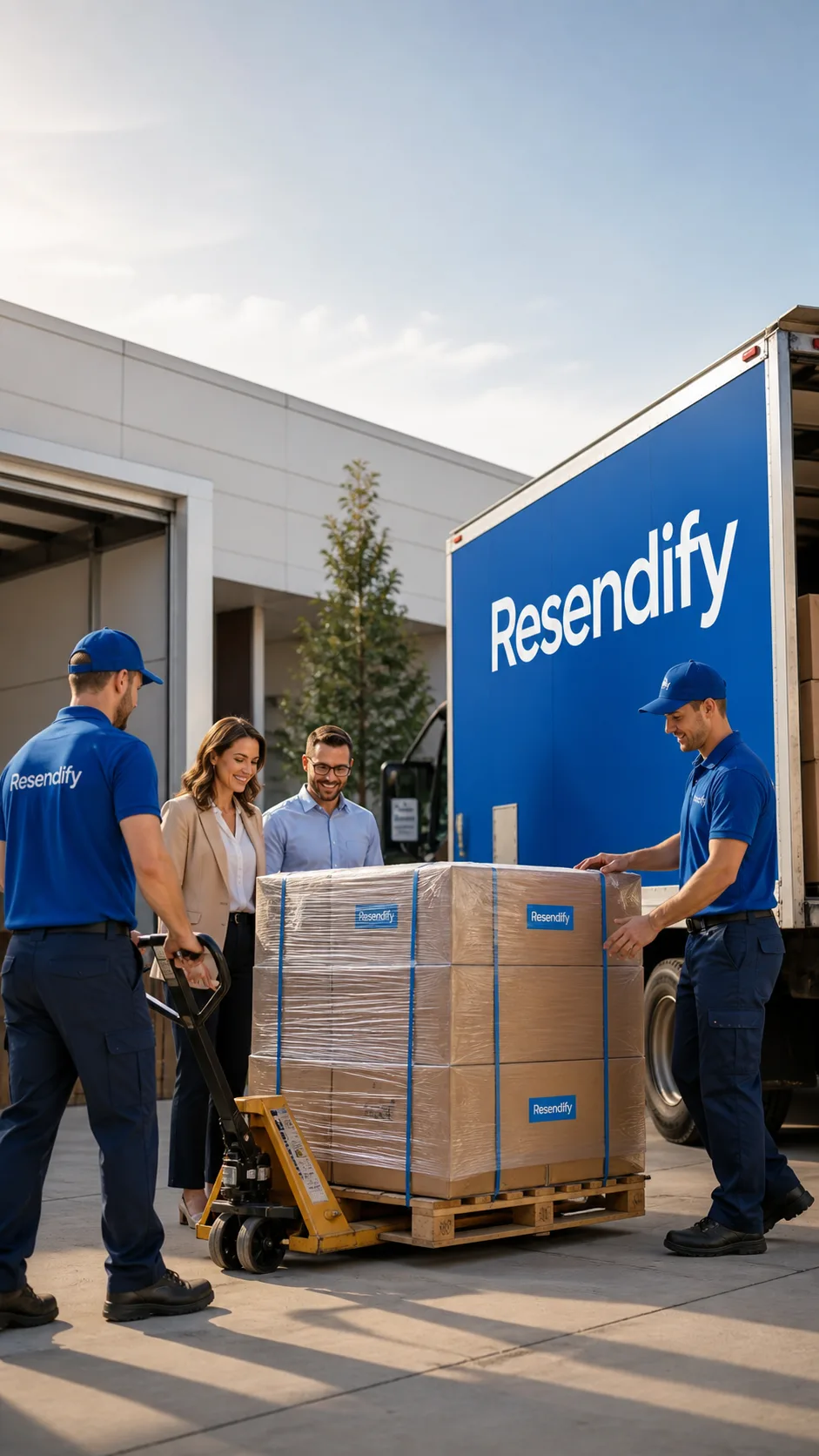
Buying tools in Europe is easy. Getting it to Australia is the part that breaks.
The European range is deeper than the export range
Brands like Festool, Metabo, Fein, Knipex, Wera, Hazet and Beta run wider catalogues in their home markets than distributors carry abroad — specialist sizes, professional-only lines and accessory systems that never make it into an export assortment.
Trade suppliers deliver domestically, not to you
The German and Italian trade catalogues where those tools are priced properly are built for domestic delivery. Without an address in the country, you either pay a re-exporter's margin or you do not buy at all.
The A$1,000 line changes how you should split orders
Duty and the import processing charge start above A$1,000 in customs value. That does not mean you should artificially split shipments — undervaluing or splitting to dodge a threshold is a compliance problem — but it does mean the economics of a run deserve planning before the suppliers ship, not after.
Stop reading "we don't ship to your country".
A real local address at checkout is all that stands between you and that cart.
From our warehouses worldwide to your doorstep — in four moves.
Resendify gives you a real local address at our warehouses. Shop where the deals are, we collect, repack and forward — you stay in control the whole way.
- Sign up
Get your local address
Pick one of our warehouses in 10 countries across Europe, the US and Asia. We assign you a real street address — yours within minutes.
Ready in 2 minutes - Shop
Buy from any store
Use your Resendify address at checkout — Amazon DE, Zara, Decathlon, eBay, anywhere. Even sellers that don't ship abroad.
Works with 10k+ shops - Consolidate
We receive and forward
Photos on arrival, optional repacking, and consolidation of multiple orders into one shipment to save up to 70%.
Up to 70% off shipping - Ship
Worldwide to your door
Pick your courier and track door-to-door. Email alerts on every tracking update.
Live email alerts
Warehouses and receiving points across key global markets
We can receive your packages in multiple strategic countries, giving you access to stores, suppliers and marketplaces that would otherwise be hard to reach internationally.
European suppliers our clients buy tools from
You know where to shop. Now get somewhere to ship it.
Create your account and your receiving address is ready in minutes.
Where professional tools actually live in Europe
Germany is the centre of gravity and it is not close. Bosch Professional, Festool, Metabo, Fein, Knipex, Wera, Wiha, Hazet, Stahlwille, Gedore and Würth all run their deepest catalogues at home, and the trade suppliers that carry them — Contorion, SVH24, Hoffmann Group, Würth's own channel — price for professionals rather than for a foreign distributor's margin.
Italy is the second pillar, mostly for hand tools and workshop equipment: Beta Utensili and USAG are the reference names, with a service and accessory ecosystem that rarely crosses borders intact. Spain contributes cutting and striking tools with a long industrial history — Bellota, Irega, Egamaster, Palmera — and the Czech Republic adds Narex, whose chisels and woodworking tools have a following far bigger than their distribution.
For a business the practical question is not which brand but which format. Hand tools, measuring instruments, bits and accessory systems are the ideal repeat purchase: dense, durable, unaffected by mains voltage, and easy to consolidate from several suppliers into one shipment. Corded power tools are where you need to stop and read the operations section below before ordering anything.
And if you are stocking a workshop rather than reselling, the European trade catalogues are usually where the specialist references live — the sizes and variants a local distributor decided were not worth listing.
- Germany: Bosch Professional, Festool, Metabo, Fein, Knipex, Wera, Wiha, Hazet, Stahlwille, Gedore, Würth
- Italy: Beta Utensili and USAG — hand tools, workshop furniture and accessory systems
- Spain: Bellota, Irega, Egamaster, Palmera — cutting, striking and agricultural tools
- Czech Republic: Narex — woodworking chisels and tools with distribution far narrower than their reputation
- Trade catalogues (Contorion, SVH24, Hoffmann Group) list the specialist references local distributors skip
- Best repeat purchases: hand tools, measuring instruments, bits and accessory systems — dense, durable, voltage-agnostic
Brand and supplier names are given as European sourcing options, reviewed August 2026. We are not a distributor or an authorised reseller for any of them, we do not hold stock, and we do not grant or verify distribution rights — commercial terms are between you and the supplier.
Importing into Australia as a business: the A$1,000 line, GST and your ABN
Australia draws a clear line. At or below a customs value of A$1,000 there is no customs duty and no import processing charge. Above it, the Australian Border Force assesses duty, GST and the processing charge at the border before release, with MFN duty around 5% on most clothing, footwear, leather goods and hand tools, and 0% on a lot of electronics.
The Australia–EU free trade agreement was concluded in March 2026 but has not entered into force, so plan on MFN rates and treat any preference as future upside rather than a line in your costing.
GST is where the business case differs from the consumer one. There is no GST-free threshold: 10% applies either way. Below A$1,000 it is collected under the vendor-collection model — by the seller, the platform or the redeliverer, which is what a forwarding service is. Above A$1,000 it is assessed at the border.
The good news for a company is that if you hold an ABN and are registered for GST, import GST is normally claimable as an input tax credit, so it becomes a cash-flow item rather than a cost. Give us your ABN and GST status at onboarding and we will reflect it in how your shipments are documented.
- A$1,000 or less in customs value: no customs duty and no import processing charge
- Above A$1,000: duty, GST and the import processing charge assessed at the border by the ABF
- No GST-free threshold — 10% applies either way, via vendor collection below the line
- MFN duty is around 5% on clothing, footwear, leather goods and hand tools; 0% on much electronics
- GST-registered businesses with an ABN normally claim import GST as an input tax credit
- Australia–EU FTA concluded March 2026 but not in force — do not cost a preference that has not started
| Customs value | Duty | GST | Import processing charge |
|---|---|---|---|
| A$1,000 or less | None | 10%, vendor-collection model | None |
| Over A$1,000 | MFN (≈5% on most of these categories) | 10% at the border | Applies |
Last updated: Reviewed August 2026. Summary of Australian Border Force and Australian Taxation Office guidance, reviewed August 2026 — general information, not customs or tax advice. Thresholds, rates and the status of the Australia–EU FTA can change; confirm at abf.gov.au and ato.gov.au and with your customs broker. We do not promise any particular customs outcome. Source: Australian Border Force — importing.
Before you order: voltage, batteries and local conformity
Three technical facts decide whether a tool order is a good idea, and we would rather you know them now than after the pallet lands. First, mains voltage. European corded tools are built for 230 V at 50 Hz. That is fine for the United Kingdom, Australia, Israel, the UAE and Chile, which run at or near the same voltage.
It is a real problem for the United States, Canada, Mexico and Colombia, which run at 110–127 V: a 230 V corded saw will not work on a 120 V site without a transformer, and no amount of good freight pricing fixes that.
Cordless platforms are usually the answer — the tool itself has no mains voltage, and many chargers are 100–240 V, though you should confirm per model rather than assume.
Second, lithium batteries. Cordless tool batteries are dangerous goods in air freight, with rules that vary by whether they are loose, packed with equipment or contained in equipment. Some can move under specific conditions, some cannot move by air at all, and the answer depends on the cell and the service. Ask us before you order batteries rather than after they arrive at the warehouse.
Third, conformity marking: CE marking is a European conformity regime. Placing tools on your local market for resale may require local marking or certification — RCM in Australia, NOM in Mexico, INMETRO in Brazil, and the market expectations around UL/ETL listing in North America. We ship your goods and document them properly; local compliance for resale is your side of the line and worth checking before you commit to volume.
- European corded tools are 230 V / 50 Hz — compatible with the UK, Australia, Israel, the UAE and Chile
- 110–127 V destinations (USA, Canada, Mexico, Colombia): corded tools need a transformer; prefer cordless platforms
- Cordless tools are usually voltage-agnostic and many chargers are 100–240 V — confirm per model
- Lithium batteries are dangerous goods in air freight: ask us before ordering, not after
- CE is European conformity — local resale may need RCM, NOM, INMETRO or UL/ETL expectations locally
- Tools are dense: consolidating several suppliers into one shipment is where the freight economics work
General technical and regulatory guidance, reviewed August 2026 — not certification advice. Dangerous-goods handling depends on the specific cell, packing configuration and carrier; conformity requirements depend on your product and market. Confirm with us before ordering batteries and with your local authority or test house before placing goods on the market.
What Resendify does for a business, and what it does not
Being precise about the boundary is more useful than a list of promises. We operate receiving warehouses across ten countries — Spain, Italy, France, Germany, the United Kingdom, Türkiye, the Czech Republic, the United States, China and Hong Kong — so your suppliers deliver domestically, which is what most of them are set up to do.
We check goods in, store them while an order builds across several suppliers, repack when the original packaging is not built for an international leg, consolidate into one shipment, and produce the export documentation: commercial invoice, packing list, real weights and dimensions, and the supplier origin documents that decide whether you pay a preferential duty rate or a full one.
What we are not is your customs broker in the destination country, a distributor, or a party to your trade terms. We do not clear goods on your behalf at destination, we do not hold stock we sell you, and we do not negotiate or guarantee terms with brands.
We also do not quote transit times we cannot control, and we do not tell you your goods will clear without charges. The Business plan exists precisely because a recurring importer needs a quote-based setup rather than a consumer membership: tailored workflows for repeat imports, room for packaging and repacking, volume-oriented planning and commercial support on request.
- Receiving warehouses in 10 countries so suppliers deliver domestically
- Check-in, storage while an order builds, and repacking for the international leg
- Consolidation into one shipment with commercial invoice, packing list, weights and dimensions
- We chase supplier origin declarations — the document that decides preferential duty
- We are not your destination customs broker, not a distributor, and not a party to your trade terms
- Business plan is quote-based: tailored workflows for repeat imports, volume-oriented planning
We declare the real value and prepare the paperwork.
Accurate invoices and customs data, so your parcel is presented as cleanly as it can be.
Estimate a shipment before you talk to us
Price a real weight and volume, then send us the details for a commercial quote.
Thousands of global shoppers trust Resendify
From fashion to car parts, from luxury to electronics — global shoppers use Resendify to buy from Europe without limits.
“Finally a service that actually works for buying from Spanish stores. I ordered from Zara España, MANGO and El Corte Inglés in the same week — everything arrived consolidated in one box. Shipping to LA was way cheaper than I expected.”
“I bought a MediaMarkt laptop that wasn't available in Canada at that price. The process was seamless — got my European address, placed the order, and Resendify handled everything from there. Will definitely use again.”
“Been sourcing European car parts for years. Resendify is the best forwarding service I've used for Europe-to-India shipments. The consolidation feature saved me hundreds on a single order.”
“Bought from a French boutique that doesn't ship to Australia. Got my Resendify address in minutes, placed the order, and it was on my doorstep in Sydney two weeks later. Exactly as advertised.”
“I source from 4–5 European suppliers every month. Resendify consolidates everything before it hits the US, which cuts my per-unit shipping cost significantly. The quote tool is accurate and the team is responsive.”
“Found a Zalando deal that was EU-only. Used Resendify, got the item shipped to Dubai without any issues. The customs documentation was all handled — that's the part I usually dread.”
Importing tools to Australia: questions companies ask
Corded European tools are 230 V / 50 Hz. That works in the UK, Australia, Israel, the UAE and Chile. It does not work on 110–127 V supplies in the USA, Canada, Mexico or Colombia without a transformer — and we will tell you that before you order rather than after. Cordless platforms sidestep the problem because the tool has no mains voltage, and many chargers accept 100–240 V, but confirm per model.
It depends on the battery and the service. Lithium cells are dangerous goods in air freight and the rules differ for loose batteries, batteries packed with equipment and batteries inside equipment. Some configurations move under specific conditions and some cannot move by air. Send us the model references before you order and we will tell you what is workable — that conversation is much cheaper before the goods arrive at our warehouse.
If you hold an ABN and are registered for GST, import GST is normally claimable as an input tax credit in your BAS, which turns it into a timing difference rather than a cost. That is a question for your accountant on your specific circumstances, but it is the usual position and it changes the arithmetic of importing versus buying locally.
Plan shipments around what you actually need, not around the threshold. Splitting a single commercial order into artificial consignments to stay under a threshold is a compliance risk, and we will not structure shipments that way. What we will do is tell you where a run sits relative to the line before your suppliers ship, so the decision is made with real numbers.
Volume and rhythm change what you need. A consumer account is built around occasional parcels; a business buying every month needs storage that fits a build-up across suppliers, packing decisions made per shipment, documentation that a customs agent can file without chasing you, and a quote rather than a fixed membership. That is what the Business plan is for, and it is priced per case because a pallet of tools every month and a monthly box of collectibles are not the same operation.
No. Clearance at destination is done by you or your customs broker, and that is deliberate: local clearance requires local licensing and local liability. What we do is the European side and the paperwork that makes clearance straightforward — a consolidated shipment, a commercial invoice that matches the goods, a packing list, real weights and dimensions and the supplier's origin documents.
Talk to us about the specific supplier before you plan around it. Some situations are simply a delivery address problem, which your European address solves outright. Others involve trade accounts or territorial agreements that are between you and the brand, and no forwarder can resolve those — we would rather tell you which one you are facing than take the order and find out later.
Still deciding? Try it for 14 days.
New accounts get a 14-day trial period — set it up now and see how the flow works.
Other routes and categories
Air-consolidated pallets out of our European warehouses, quoted per shipment — the format most commercial orders end up travelling in.
We receive from as many suppliers as you need, palletize and export once, so you pay one freight and clear customs once.
Elevator components, vehicle parts, stone, tile and equipment palletized at our Italian warehouse and flown out.
Europe is where the language editions, the regional exclusives and the deep backlist live — and for a hobby shop, comic
European wholesale has moved to platforms with small minimums, which means a boutique can now buy from twelve brands at
European factories set the reference in ceramic tile, HPL and compact laminate, technical fixings and architectural fini
Since the $800 de minimis exemption was suspended on 29 August 2025, US import duty can apply from the first dollar — wh
EU-origin goods can enter the UK at 0% duty under the Trade and Cooperation Agreement — but only when your European supp
Under CETA, goods of EU origin can enter Canada at 0% duty when the supplier puts the origin declaration on the invoice
We have actually done this lane at commercial scale: 150 HPL panels on a single pallet, 296 kg, declared at €2,340 — the
Tell us what you import
The more concrete this is, the more useful our reply. We receive in ten countries — Spain, Italy, France, Germany, the UK, Türkiye, the Czech Republic, the United States, China and Hong Kong — and forward anywhere, so tell us where you actually buy and where it actually has to land, even if this page is about a different lane.
Start importing tools on a schedule that fits your business
Tell us what you buy and how often, and we will come back with a setup and a quote — not a generic membership.