
Freight consolidation from Europe
for multi-supplier orders
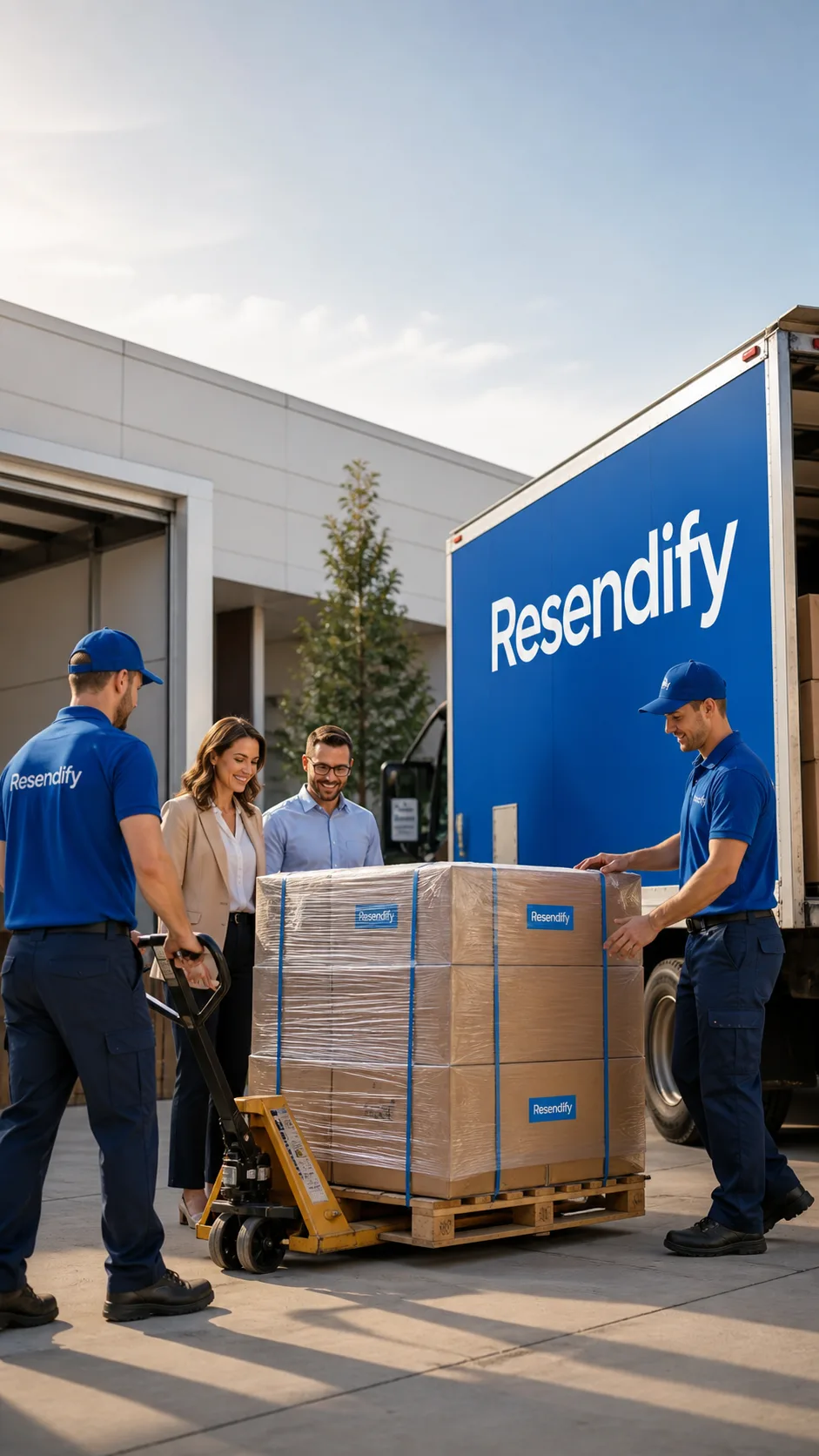
Buy from as many European suppliers as the project needs and export once. We operate receiving warehouses in ten countries — Spain, Italy, France, Germany, the UK, Türkiye, the Czech Republic, the United States, China and Hong Kong — so each supplier delivers domestically to a local address. The order builds at the warehouse, gets consolidated and professionally palletized, and leaves as one shipment with one set of export documents. Built for businesses on the quote-based Business plan; the published cases behind this page moved real cargo exactly this way.
Estimate a shipment before you talk to us
Price a real weight and volume, then send us the details for a commercial quote.
Quote reply: within 24 business hours from Spain and Italy, up to 3 business days from our other countries.
Multi-supplier orders fall apart at the border, one shipment at a time.
Each supplier shipment pays freight and customs on its own
Run a multi-supplier order as separate international shipments and you pay the international leg once per supplier — and generate a customs entry per shipment, each with its own paperwork and its own chance of getting stuck. Consolidated, the whole order crosses once: one freight quote, one document set, one clearance.
Nobody packs for export
Each supplier packs for a domestic courier hop, because that is the delivery they believe they are making. None of those boxes is export-grade. Consolidation is the step where repacking, edge protection, strapping and ISPM-15 wood happen — before the international leg, not after the damage.
Problems surface at destination, where they are yours
A shortage or a crushed box discovered after clearance is your cost and your delay. At a receiving warehouse — every delivery checked in against your order and photographed — the same problem is a supplier claim raised at origin, while fixing it is still cheap.
From our warehouses worldwide to your doorstep — in four moves.
Resendify gives you a real local address at our warehouses. Shop where the deals are, we collect, repack and forward — you stay in control the whole way.
- Sign up
Get your local address
Pick one of our warehouses in 10 countries across Europe, the US and Asia. We assign you a real street address — yours within minutes.
Ready in 2 minutes - Shop
Buy from any store
Use your Resendify address at checkout — Amazon DE, Zara, Decathlon, eBay, anywhere. Even sellers that don't ship abroad.
Works with 10k+ shops - Consolidate
We receive and forward
Photos on arrival, optional repacking, and consolidation of multiple orders into one shipment to save up to 70%.
Up to 70% off shipping - Ship
Worldwide to your door
Pick your courier and track door-to-door. Email alerts on every tracking update.
Live email alerts
Warehouses and receiving points across key global markets
We can receive your packages in multiple strategic countries, giving you access to stores, suppliers and marketplaces that would otherwise be hard to reach internationally.
Where consolidated orders come from: real European stores
Multi-supplier, multi-country: how one export replaces many shipments
Freight consolidation from Europe means collecting purchases from several suppliers — often in several countries — at a receiving warehouse, building them into one properly packed and palletized unit, and exporting once with one set of documents. We receive in ten countries: Spain, Italy, France, Germany, the United Kingdom, Türkiye, the Czech Republic, the United States, China and Hong Kong.
Inside Europe the reach is wider than the list suggests, because any European store that delivers to a local address becomes your supplier — a French brand shipping to our Spanish warehouse, a German catalogue delivering within Germany — with no export process on their side.
Where the order consolidates is a planning decision made with you at setup, based on where your suppliers deliver and where the shipment is going.
What the single export changes is easiest to see as a list of things that happen once instead of once per supplier: one freight quote, one commercial invoice and packing list with real weights and dimensions, one clearance event at destination — filed by you or your customs broker — and one delivery.
The unit itself is built professionally: edge protection, strapping, ISPM-15 heat-treated wood, repacking where retail packaging falls short.
And the model is not theoretical: the published gym case consolidated 24 boxes into one 317 kg air shipment at ≈€13/kg all-in — the bottom of the ~€13–18/kg reference band, on volume and a one-off carrier rate, with every route quoted individually — and the published HPL case moved 150 panels of 8 mm, 296 kg on one 120×80×50 cm pallet, with the itemised logistics bill published.
- Receiving warehouses in 10 countries: Spain, Italy, France, Germany, the UK, Türkiye, the Czech Republic, the US, China and Hong Kong
- Any European store that delivers to a local address becomes your supplier — no export process on their side
- The order builds at the warehouse until complete — the slowest supplier stops setting your date
- One consolidated unit: professional palletizing, edge protection, strapping, ISPM-15 wood
- One documentation set and one clearance event instead of one per supplier shipment
- Where the order consolidates is planned with you at setup, on the quote-based Business plan
Service description and published-case figures reviewed August 2026 — not commercial or customs advice. Clearance at destination is done by you or your customs broker; case figures describe real one-off operations, not a tariff, and every consolidation is quoted individually.
Operations: what happens between the first delivery and the export
Consolidation is mostly discipline, applied in the right order. Reception: every supplier delivery is checked against your order and photographed, so a wrong reference, a shortage or visible damage becomes a supplier claim raised at origin, not a surprise at destination. Storage: goods wait while the rest of the order builds, which is what lets several suppliers with several schedules become one shipment instead of a scattered stream.
Packing: retail boxes get repacked where the original packaging is not built for the international leg, and the load is palletized as one unit — edge protection, strapping, ISPM-15 heat-treated wood — so a forklift moves it in one piece and a customs agent reads it in one document set.
Goods that cannot fly — aerosols, solvent-based adhesives and certain coatings are dangerous goods in air freight — get flagged before you buy, while changing the plan is still cheap.
On transit we point at the record rather than a slogan. For air-consolidated shipments the honest description is an orientative band on the order of 1–3 weeks door to door, anchored in the two operations we publish — the HPL pallet documented 17 days door to door, and the gym case ran approximately from Day 0 to around Day 15 — and orientative, not a promise: it depends on route, pickup, consolidation and customs clearance.
- Reception with photos: a problem caught at origin is a supplier claim — at destination it is your cost
- Storage while the order builds: several suppliers with several schedules become one shipment
- Repacking where retail packaging falls short; edge protection, strapping, ISPM-15 heat-treated wood
- Aerosols, solvent adhesives and some coatings cannot fly — tell us what is in the order before you buy
- Transit, said honestly: an orientative 1–3 week band anchored on the documented 17-day HPL case and the ~Day 15 gym case — never a promise; route, pickup, consolidation and customs clearance move it
Operational guidance reviewed August 2026 — not customs, certification or carrier advice. Dangerous-goods handling depends on the specific product and service; transit depends on route, pickup, consolidation and customs clearance and is never guaranteed.
What Resendify does for a business, and what it does not
Being precise about the boundary is more useful than a list of promises. We operate receiving warehouses across ten countries — Spain, Italy, France, Germany, the United Kingdom, Türkiye, the Czech Republic, the United States, China and Hong Kong — so your suppliers deliver domestically, which is what most of them are set up to do.
We check goods in, store them while an order builds across several suppliers, repack when the original packaging is not built for an international leg, consolidate into one shipment, and produce the export documentation: commercial invoice, packing list, real weights and dimensions, and the supplier origin documents that decide whether you pay a preferential duty rate or a full one.
What we are not is your customs broker in the destination country, a distributor, or a party to your trade terms. We do not clear goods on your behalf at destination, we do not hold stock we sell you, and we do not negotiate or guarantee terms with brands.
We also do not quote transit times we cannot control, and we do not tell you your goods will clear without charges. The Business plan exists precisely because a recurring importer needs a quote-based setup rather than a consumer membership: tailored workflows for repeat imports, room for packaging and repacking, volume-oriented planning and commercial support on request.
- Receiving warehouses in 10 countries so suppliers deliver domestically
- Check-in, storage while an order builds, and repacking for the international leg
- Consolidation into one shipment with commercial invoice, packing list, weights and dimensions
- We chase supplier origin declarations — the document that decides preferential duty
- We are not your destination customs broker, not a distributor, and not a party to your trade terms
- Business plan is quote-based: tailored workflows for repeat imports, volume-oriented planning
Freight consolidation from Europe: what companies ask
Yes — that is what the ten receiving countries are for: Spain, Italy, France, Germany, the UK, Türkiye, the Czech Republic, the United States, China and Hong Kong. Each supplier delivers domestically to the local address, with no export process on their side. Where the order consolidates is planned with you at setup — it depends on where your suppliers actually deliver and where the shipment is going — which is exactly what the first step of the process is for, and why the Business plan is quote-based.
Yes. Every delivery is checked in against your order and photographed at reception, and the shipment is not dispatched until you have decided with that evidence in front of you. A wrong reference, a shortage or visible damage caught at origin is a supplier claim; the same discovery at destination is your cost and your delay.
There is no rate card, because supplier count, weight, volume and route change everything — every consolidation is quoted individually. For calibration, the published record: the gym case moved 24 boxes and 317 kg at ≈€13/kg all-in — the bottom of the ~€13–18/kg reference band, helped by volume and a one-off carrier rate; your route is quoted individually. The HPL case worked out at roughly ≈€10.5/kg all-in — a one-off; the working reference for loads over 200 kg is below €15/kg, varying with route, volume and season. Send real dimensions, weight and declared value through the pallet form in the calculator and a person replies with a quote.
Air freight is charged on chargeable weight: the higher of the real weight and the volumetric weight, which in air cargo is usually length × width × height in cm divided by 6,000 (about 167 kg per cubic metre). A light but bulky pallet pays for its volume. Pickup, consolidation, palletizing, export paperwork and the route itself come on top. We don't publish a rate card because it moves with route and date: enter real weights and measures in the quoter and a person prices that exact load.
A parcel-forwarding address — what Latin America calls a casillero — receives personal purchases and forwards them by courier as parcels: built for individuals and occasional orders. Consolidated cargo gathers orders from one or several suppliers into a single commercial shipment, with an invoice, a packing list and a formal import at destination. Resendify does both, but they are different services: if you buy for resale or for a project, consolidated cargo is the one for you.
We are a forwarder and consolidator with warehouses in ten countries: we receive your suppliers' goods, consolidate and palletize them, prepare the commercial invoice and packing list, and quote the air freight to your country. What we don't do is customs clearance at destination: that entry is filed by your local customs broker, who holds the licence there.
Volume and rhythm change what you need. A consumer account is built around occasional parcels; a business buying every month needs storage that fits a build-up across suppliers, packing decisions made per shipment, documentation that a customs agent can file without chasing you, and a quote rather than a fixed membership. That is what the Business plan is for, and it is priced per case because a pallet of tools every month and a monthly box of collectibles are not the same operation.
No. Clearance at destination is done by you or your customs broker, and that is deliberate: local clearance requires local licensing and local liability. What we do is the European side and the paperwork that makes clearance straightforward — a consolidated shipment, a commercial invoice that matches the goods, a packing list, real weights and dimensions and the supplier's origin documents.
Talk to us about the specific supplier before you plan around it. Some situations are simply a delivery address problem, which your European address solves outright. Others involve trade accounts or territorial agreements that are between you and the brand, and no forwarder can resolve those — we would rather tell you which one you are facing than take the order and find out later.
Where to go deeper
The hub page for palletized cargo: what moves on pallets, how they are built, how quoting works — and the directory of every origin-to-destination lane we publish.
A multi-panel load consolidated onto one 120×80×50 cm pallet, with the itemised logistics bill published end to end.
The persona page for contractors sourcing European materials: supplier map, code caveats and the same consolidation logic applied to a site programme.
Tell us what you import
The more concrete this is, the more useful our reply. We receive in ten countries — Spain, Italy, France, Germany, the UK, Türkiye, the Czech Republic, the United States, China and Hong Kong — and forward anywhere, so tell us where you actually buy and where it actually has to land, even if this page is about a different lane.
Start importing consolidated freight on a schedule that fits your business
Tell us what you buy and how often, and we will come back with a setup and a quote — not a generic membership.