
Pallet shipping from the USA
to Australia
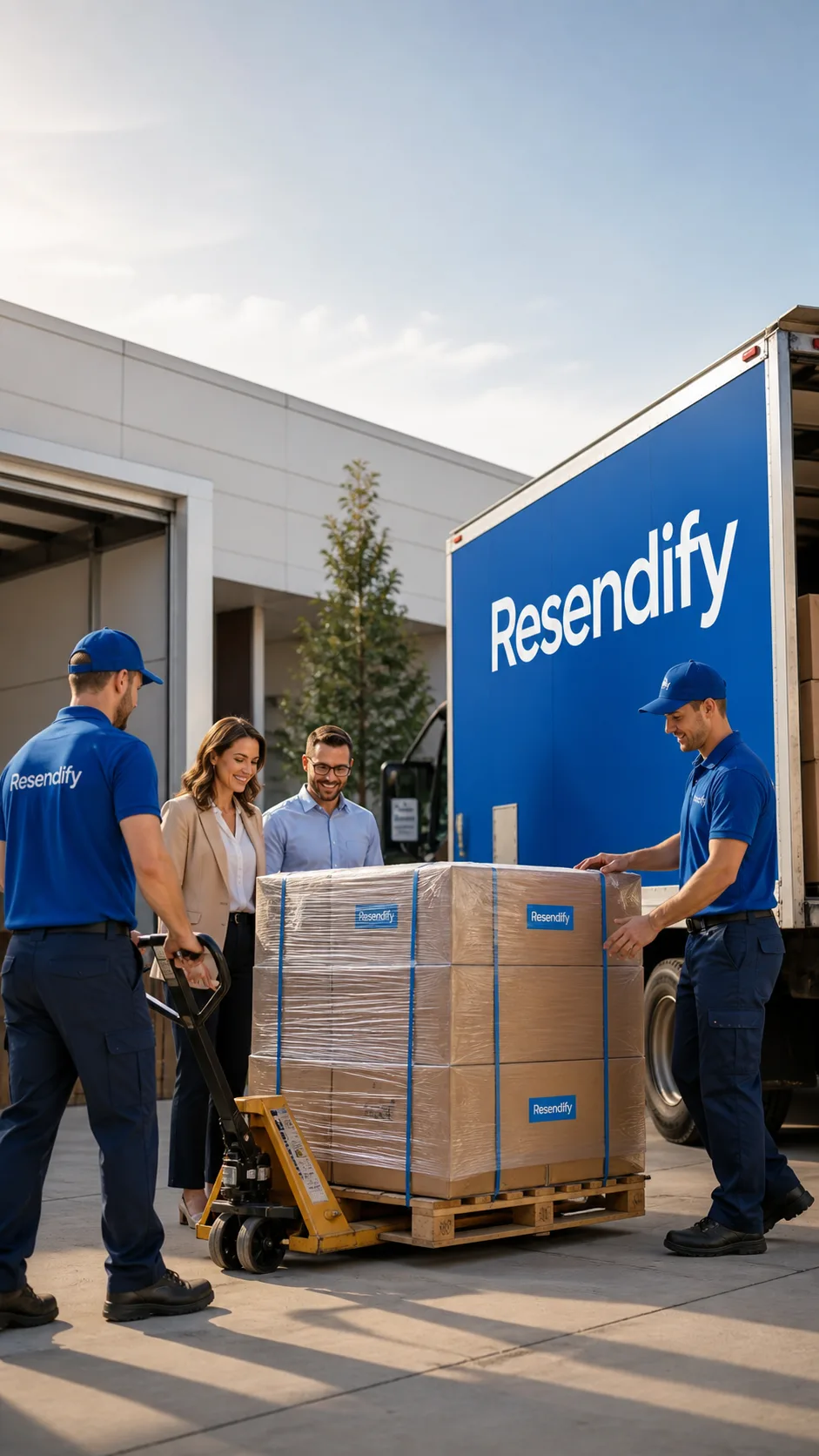
Several suppliers from the USA consolidated into one professionally built pallet, export documentation done once, and air freight for an order that cannot wait for a container. Australia is an AUSFTA partner since January 2005, where no certificate of origin is required but duty relief still depends on the goods being US-originating. Quoted per shipment on the Business plan.
Estimate a shipment before you talk to us
Price a real weight and volume, then send us the details for a commercial quote.
We request the rate at origin and reply with your quote within 3 business days.
The US price works at pallet scale. Parcel by parcel, it evaporates.
Biosecurity can hold the pallet, not just the paperwork
Australia requires timber packaging to comply with ISPM 15 and be free of biosecurity risk material. Packaging showing signs of pests can be ordered for treatment, export or destruction, whatever the goods on it.
The supplier quotes ex-works and stops there
The US manufacturer or distributor with the right price has a domestic sales desk, not an export one. It will deliver to an address in its own country without blinking.
Loose parcels destroy the freight economics
A dense commercial order shipped box by box pays courier pricing on every box. Consolidated onto one properly built pallet, the same order is weighed, documented and priced once.
From our warehouses worldwide to your doorstep — in four moves.(View all)
Resendify gives you a real local address at our warehouses. Shop where the deals are, we collect, repack and forward — you stay in control the whole way.
- 01Sign up
Get your local address
Pick a warehouse in Spain, Germany, the UK or the US. We assign you a real street address — yours within minutes.
Ready in 2 minutes - 02Shop
Buy from any store
Use your Resendify address at checkout — Amazon DE, Zara, Decathlon, eBay, anywhere. Even sellers that don't ship abroad.
Works with 10k+ shops - 03Consolidate
We receive and forward
Photos on arrival, optional repacking, and consolidation of multiple orders into one shipment to save up to 70%.
Up to 70% off shipping - 04Ship
Worldwide to your door
Pick your courier and track door-to-door. Email alerts on every tracking update.
Live email alerts
Warehouses and receiving points across key global markets
We can receive your packages in multiple strategic countries, giving you access to stores, suppliers and marketplaces that would otherwise be hard to reach internationally.
US suppliers whose orders often end up on a pallet
What leaves the USA on a pallet to Australia
The USA exports the kind of goods that fill a pallet rather than a parcel: building materials and tools from Home Depot and Lowe's, industrial and MRO supplies from Grainger and McMaster-Carr, auto and performance parts, and packaging and warehouse equipment. Dense, heavy, and bought in the quantity a project or a resale order needs.
The blocker is rarely the supplier's willingness to sell. It is that a US factory or distributor is set up to invoice and deliver domestically, and an overseas buyer is not the customer its logistics were designed for. Giving that supplier a local address turns the export problem back into the domestic delivery it already knows how to do.
From there it is ours, and it is physical. Everything is received and checked against your order, photographed, weighed and measured. Fragile faces get edge protection and corner boards; heavy items go to the base and the weight is distributed so the load travels square; the stack is strapped and wrapped, and wood packaging is ISPM-15 treated. Then the paperwork happens once for the whole pallet instead of once per parcel: one commercial invoice matching the contents, one packing list, real weights and dimensions.
- A local address in the origin country, so the supplier ships domestically.
- Consolidation across as many suppliers as the order needs.
- Professional palletizing: edge protection, weight distribution, strapping, ISPM-15 wood.
- One commercial invoice and one packing list for the whole shipment.
- Air consolidation, quoted per shipment on the Business plan.
- A Delaware warehouse: the state has no state or local sales tax, so a purchase delivered there normally carries none.
Importing US goods into Australia as a company: 10% GST, duty of 0–5% on most lines and what AUSFTA asks for
Above A$1,000 in customs value, goods need a full import declaration, and the Australian Border Force assesses duty, GST and the import processing charge before release; most businesses use a licensed customs broker. MFN duty is low: about 55% of non-agricultural tariff lines are duty-free and the rest sit at up to 5% (WTO, 2025 data). GST of 10% applies whatever the origin.
AUSFTA, in force since 2005, needs no certificate of origin: the importer claims on its own knowledge or a statement in any form showing the goods meet the rules of origin. Only US-originating goods qualify; a Chinese-made item bought in the US pays MFN duty. We consolidate in Delaware and prepare one commercial invoice and packing list; your broker lodges the entry and you pay duty and GST.
- The ABF can verify a preference claim and ask for cost or manufacturing information; the preference can be denied if origin is not substantiated.
- GST-registered businesses with an ABN can normally claim import GST as an input tax credit; check your position with your accountant.
- At or below A$1,000 there is no duty or import processing charge and GST is collected differently; splitting a commercial order to stay under the line is a compliance risk.
- Timber pallets and dunnage must comply with ISPM 15 under Australia's Biosecurity Import Conditions (BICON) and be free of biosecurity risk material.
- Some goods need import permits or meet extra biosecurity or safety conditions; check BICON and classification with your customs broker before your suppliers ship.
| Component | Rate | Base |
|---|---|---|
| Customs duty (MFN) | 0% on about 55% of non-agricultural lines, up to 5% on most others; 0% for goods that qualify as US-originating under AUSFTA | Customs value |
| GST | 10%, whatever the origin | Customs value + duty + international transport and insurance |
| Import processing charge | Charged on full import declarations; amount set by the ABF | Per declaration |
Last updated: Reviewed September 2026. Compiled from ABF guidance on AUSFTA claims of origin and import declarations, AUSFTA Article 5.12, the WTO tariff profile for Australia (2025 data), ATO GST guidance and DAFF rules for timber packaging; reviewed September 2026. The ABF origin guide could not be fetched directly and was checked through DFAT, CBP and secondary summaries; import processing charge amounts are not shown. A planning baseline, not a ruling: confirm with the Australian Border Force and your customs broker. Source: Australian Border Force – AUSFTA: supporting a claim of origin.
Before a pallet leaves the US: export filing, controls, sales tax and origin
US exports are reported to the Census Bureau as Electronic Export Information (EEI) filed in AES when any Schedule B line is worth more than US$2,500, or whenever a licence is required. The filer is the US principal party in interest (USPPI) or its authorised agent; in a routed export, the foreign buyer authorises a US agent. The ITN, or exemption legend, goes on the air waybill.
Most hardware, building supplies, maintenance parts and auto parts are classified EAR99 and ship without a licence, but items with an ECCN, restricted parties or prohibited end uses change that. Delaware has no state or local sales tax, so purchases delivered there normally carry none. Wooden pallets must meet ISPM-15, and buying something in the US does not make it US-origin.
- When you request a quote, give the value per product line, and the Schedule B or HTS code if you have it: EEI is assessed line by line, so one pallet may need filing for some lines only.
- Agree in writing who files the EEI before goods ship. A foreign company acting as USPPI cannot file itself and must authorise a US agent; for air freight the filing is due at least 2 hours before departure.
- EAR99 means an item is not on the Commerce Control List; an ECCN means it is, and some need a licence. Even EAR99 goods cannot go to an embargoed destination or a restricted party, so check buyers and consignees against the Consolidated Screening List.
- Delaware's gross receipts tax is levied on sellers, not buyers, so an order shipped to a Delaware address normally shows no sales tax. Picking goods up in a store in another state means paying that state's sales tax.
- Any 0% or preferential duty depends on where a product was made, not where you bought it. Retailers rarely know the origin, so ask the manufacturer for country-of-origin data before counting on a preference.
| Topic | Rule | What it means for you |
|---|---|---|
| EEI in AES | Required per Schedule B line over US$2,500 (same USPPI, consignee and flight), or whenever a licence is required | Give the value per product line when you request a quote |
| Who files | USPPI or its authorised agent; routed exports: a US agent authorised by the foreign buyer; ITN or exemption legend on the air waybill | Settle who files, in writing, before shipment |
| Export controls (EAR) | EAR99 usually needs no licence; ECCN items may; embargoes, restricted parties and prohibited end uses override | Flag any item with an ECCN and screen the parties involved |
| Delaware sales tax | No state or local sales tax; gross receipts tax is levied on sellers | Deliveries to Delaware normally carry no sales tax; in-store pickup in another state does |
| Wood packaging | ISPM-15: heat-treated or fumigated and marked | Wooden pallets and crates need the IPPC mark; plastic pallets fall outside the standard |
| Origin | Bought in the US is not the same as US origin | Get origin data from the manufacturer before relying on any duty preference |
Last updated: Reviewed September 2026. Compiled from the Foreign Trade Regulations (15 CFR Part 30, sections 30.3, 30.4, 30.7 and 30.37), BIS and trade.gov guidance on EAR99 and end-user controls, the Delaware Division of Revenue gross receipts tax FAQ and USDA APHIS guidance on wood packaging, reviewed September 2026. Who counts as USPPI when a foreign company buys from a US retailer is not settled in the sources checked. Planning baseline, not legal advice: confirm with the US Census Bureau, BIS and your customs broker. Source: US Census Bureau — Foreign Trade Regulations.
What we publish, and what we will not pretend
Three operations are published on this site with their real figures. An HPL pallet: 150 panels, 296 kg, one pallet, the logistics bill in full, 17 days documented door to door. A gym fit-out: 24 packages, 317 kg, consolidated into a single pallet. And an elevator shipment: two door leaves at 78 kg each plus a 124 kg motor, 280 kg. The first two ran Spain → Mexico; the third, Spain → Colombia.
None of them ran out of the USA. We show them because the operation is identical whatever is on the pallet and wherever it lands — receive from several suppliers, check against the order, build and document one shipment, fly it, hand a clean entry to the importer's broker. What we will not do is attach those numbers to a lane they did not run on.
Your shipment gets quoted on your weight, your volume, your route and your pickup. Transit is an orientative band anchored on those cases, never a delivery promise.
What Resendify does for a business, and what it does not
Being precise about the boundary is more useful than a list of promises. We operate receiving warehouses across ten countries — Spain, Italy, France, Germany, the United Kingdom, Türkiye, the Czech Republic, the United States, China and Hong Kong — so your suppliers deliver domestically, which is what most of them are set up to do.
We check goods in, store them while an order builds across several suppliers, repack when the original packaging is not built for an international leg, consolidate into one shipment, and produce the export documentation: commercial invoice, packing list, real weights and dimensions, and the supplier origin documents that decide whether you pay a preferential duty rate or a full one.
What we are not is your customs broker in the destination country, a distributor, or a party to your trade terms. We do not clear goods on your behalf at destination, we do not hold stock we sell you, and we do not negotiate or guarantee terms with brands.
We also do not quote transit times we cannot control, and we do not tell you your goods will clear without charges. The Business plan exists precisely because a recurring importer needs a quote-based setup rather than a consumer membership: tailored workflows for repeat imports, room for packaging and repacking, volume-oriented planning and commercial support on request.
- Receiving warehouses in 10 countries so suppliers deliver domestically
- Check-in, storage while an order builds, and repacking for the international leg
- Consolidation into one shipment with commercial invoice, packing list, weights and dimensions
- We chase supplier origin declarations — the document that decides preferential duty
- We are not your destination customs broker, not a distributor, and not a party to your trade terms
- Business plan is quote-based: tailored workflows for repeat imports, volume-oriented planning
Pallets from the USA to Australia: what buyers ask
A single pallet is the format, not a minimum we tolerate. You can start with one order; recurring or larger programmes move to the Business plan, which is quote-based precisely because pallet operations differ too much for a fixed membership.
We will not print a delivery promise, because pickup, consolidation and customs clearance are real variables. The anchors we can show are the published cases: the HPL pallet documented 17 days door to door and the gym fit-out ran approximately Day 0 to around Day 15. Read that as an orientative band on the order of 1–3 weeks for air shipments — orientative, not a promise, and from the lanes those cases actually ran.
We receive in ten countries, so a mixed order is normal. What we will not do is pretend it is free: moving goods between our warehouses to build one pallet is a real cost and gets quoted as a visible line. Sometimes two pallets from two origins beat one consolidated pallet, and we will say so.
Air freight is charged on chargeable weight: the higher of the real weight and the volumetric weight, which in air cargo is usually length × width × height in cm divided by 6,000 (about 167 kg per cubic metre). A light but bulky pallet pays for its volume. Pickup, consolidation, palletizing, export paperwork and the route itself come on top. We don't publish a rate card because it moves with route and date: enter real weights and measures in the quoter and a person prices that exact load.
A parcel-forwarding address — what Latin America calls a casillero — receives personal purchases and forwards them by courier as parcels: built for individuals and occasional orders. Consolidated cargo gathers orders from one or several suppliers into a single commercial shipment, with an invoice, a packing list and a formal import at destination. Resendify does both, but they are different services: if you buy for resale or for a project, consolidated cargo is the one for you.
We are a forwarder and consolidator with warehouses in ten countries: we receive your suppliers' goods, consolidate and palletize them, prepare the commercial invoice and packing list, and quote the air freight to your country. What we don't do is customs clearance at destination: that entry is filed by your local customs broker, who holds the licence there.
Volume and rhythm change what you need. A consumer account is built around occasional parcels; a business buying every month needs storage that fits a build-up across suppliers, packing decisions made per shipment, documentation that a customs agent can file without chasing you, and a quote rather than a fixed membership. That is what the Business plan is for, and it is priced per case because a pallet of tools every month and a monthly box of collectibles are not the same operation.
No. Clearance at destination is done by you or your customs broker, and that is deliberate: local clearance requires local licensing and local liability. What we do is the European side and the paperwork that makes clearance straightforward — a consolidated shipment, a commercial invoice that matches the goods, a packing list, real weights and dimensions and the supplier's origin documents.
Talk to us about the specific supplier before you plan around it. Some situations are simply a delivery address problem, which your European address solves outright. Others involve trade accounts or territorial agreements that are between you and the brand, and no forwarder can resolve those — we would rather tell you which one you are facing than take the order and find out later.
Other pallet lanes
The origin hub: what leaves the USA on a pallet and how the consolidation works.
If part of your order is Spanish, we receive there too — same pallet, same paperwork.
a US Trade Promotion Agreement partner since 2009, where US-origin consumer and industrial goods enter duty-free when the origin claim is documented
a dollarized economy with no US trade agreement in force yet, since the reciprocal deal signed in March 2026 still awaits Constitutional Court review
a CAFTA-DR partner since March 2007, where duty relief depends on a product's US origin while the 18% ITBIS applies either way
Many suppliers in, one documented shipment out — one freight and one customs entry.
Tell us what you import
The more concrete this is, the more useful our reply. We receive in ten countries — Spain, Italy, France, Germany, the UK, Türkiye, the Czech Republic, the United States, China and Hong Kong — and forward anywhere, so tell us where you actually buy and where it actually has to land, even if this page is about a different lane.
Start importing palletized cargo from the USA to Australia on a schedule that fits your business
Tell us what you buy and how often, and we will come back with a setup and a quote — not a generic membership.