
Import apparel and accessories
from Europe to Colombia
European wholesale has moved to platforms with small minimums, which means a boutique can now buy from twelve brands at once — and that is precisely the buying pattern that needs one address and one consolidated shipment rather than twelve international parcels. Colombia's low-value threshold moved twice in two years and the courier regime it belongs to is not designed for stock purchases — which is why a company importing from Europe should be planning around ordinary import, and around the EU trade agreement.
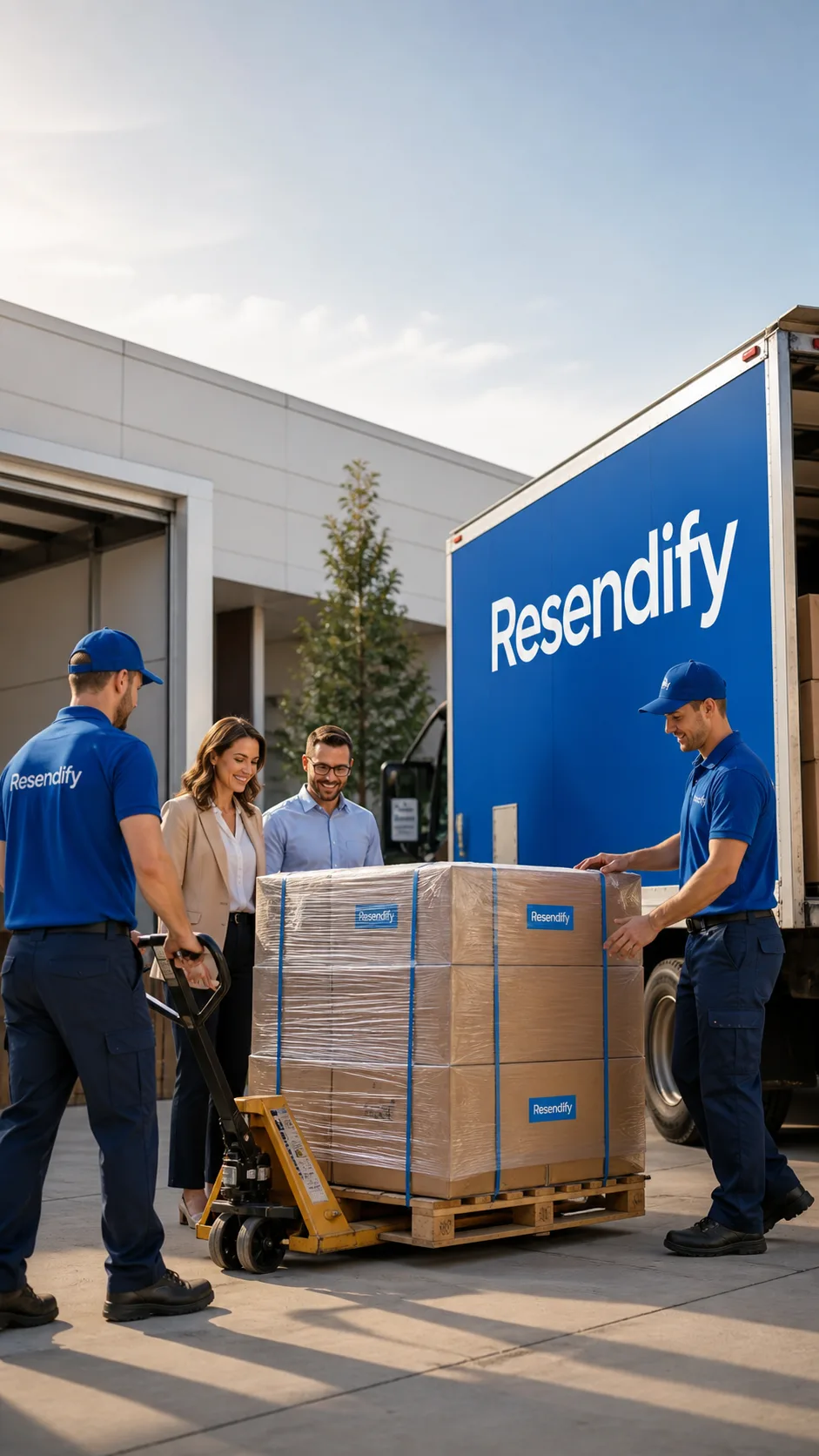
Buying clothing in Europe is easy. Getting it to Colombia is the part that breaks.
Small minimums, many suppliers, twelve shipping bills
Wholesale platforms let you order from a dozen European brands with low minimums. Each one ships separately, so what looked like a smart buy becomes a dozen international freight charges and a dozen customs events.
Most European brands have no distributor in your market
The labels a multibrand boutique wants are frequently sold through European wholesale only. Without an address in Europe, the answer from the brand is that they do not export to your country — not that they will not sell to you.
The courier regime is not built for your stock
The de minimis conversation belongs to the courier modality, which exists for occasional non-commercial shipments. A company buying inventory files an ordinary import against its NIT. Costing a purchase order on courier thresholds is how importers end up with a landed cost they did not plan for.
Stop reading "we don't ship to your country".
A real local address at checkout is all that stands between you and that cart.
From our warehouses worldwide to your doorstep — in four moves.
Resendify gives you a real local address at our warehouses. Shop where the deals are, we collect, repack and forward — you stay in control the whole way.
- Sign up
Get your local address
Pick one of our warehouses in 10 countries across Europe, the US and Asia. We assign you a real street address — yours within minutes.
Ready in 2 minutes - Shop
Buy from any store
Use your Resendify address at checkout — Amazon DE, Zara, Decathlon, eBay, anywhere. Even sellers that don't ship abroad.
Works with 10k+ shops - Consolidate
We receive and forward
Photos on arrival, optional repacking, and consolidation of multiple orders into one shipment to save up to 70%.
Up to 70% off shipping - Ship
Worldwide to your door
Pick your courier and track door-to-door. Email alerts on every tracking update.
Live email alerts
Warehouses and receiving points across key global markets
We can receive your packages in multiple strategic countries, giving you access to stores, suppliers and marketplaces that would otherwise be hard to reach internationally.
European suppliers our clients buy clothing from
You know where to shop. Now get somewhere to ship it.
Create your account and your receiving address is ready in minutes.
How European apparel wholesale actually works now
The buying model changed and it changed in your favour. Wholesale marketplaces — Ankorstore, Orderchamp, Faire's European catalogue — put thousands of European brands behind one login with minimums a small boutique can meet, which is a different world from the days of trade fairs and territory-wide minimums.
Alongside them sit the stock and multibrand distributors such as Brandsdistribution and BigBuy, useful for branded overstock rather than current season, and the manufacturing regions that still matter: knitwear and footwear in northern Portugal, leather and tailoring in Italy, and the Spanish supply base around Galicia and the Valencia region.
The consequence for a buyer is a many-suppliers, small-order pattern, which is exactly where a European address earns its keep. Twelve brands shipping to twelve destinations is twelve freight bills; twelve brands shipping to one address in Spain, Italy, France, Germany or Portugal is one consolidated shipment with one set of documents. It also lets you order the way the platforms are designed to be ordered — small, frequent, reactive to what actually sells — instead of forcing every buy into a container-sized decision.
- Wholesale platforms with small minimums: Ankorstore, Orderchamp, Faire's European catalogue
- Stock and multibrand distributors: Brandsdistribution, BigBuy — branded overstock rather than current season
- Manufacturing regions: knitwear and footwear in northern Portugal, leather and tailoring in Italy, Spanish supply base
- Many suppliers with small orders is the modern pattern — and the one that needs consolidation most
- One European address serves every brand you buy from in that country
- Commercial terms, minimums and territory rules are set by each brand, not by us
Platform and supplier names are listed as European sourcing options, reviewed August 2026. Resendify is not a wholesaler or distributor, holds no stock and does not negotiate or guarantee trade terms — those are between you and each brand or platform.
Importing into Colombia as a company: the courier threshold, ordinary import and EU origin
The threshold story in Colombia has been unstable: Decree 1474 of 2025 changed it, Ruling C-079 of 2026 struck that down, and the effective figure returned to US$200 FOB. Under the courier modality, shipments above that pay 19% VAT plus the single courier tariff, typically around 10%; below it, they are excluded from VAT and pay the courier tariff.
Useful to know — but largely beside the point for you, because that modality is designed for occasional non-commercial shipments, not for a company buying inventory for resale.
What applies to your stock is ordinary import: an import declaration filed against your NIT, normally through a customs agency, with duty by tariff heading plus 19% VAT. Two things then matter. First, if you are an ordinary-regime VAT taxpayer, import VAT is generally creditable against the VAT you charge on sales, which turns it from cost into cash flow — the position is different for simplified-regime taxpayers.
Second, the EU–Colombia trade agreement means goods of genuine EU origin can qualify for preferential duty when your supplier issues the origin declaration, and textiles are exactly the category where the base rates hurt most, so the declaration is worth chasing.
- Courier threshold back to US$200 FOB after Ruling C-079 of 2026 struck down Decree 1474 of 2025
- Courier modality above the threshold: 19% VAT plus the single courier tariff (typically ~10%)
- The courier modality is for occasional non-commercial shipments — stock for resale goes as ordinary import
- Ordinary import: declaration against your NIT, normally via a customs agency, duty by tariff heading plus 19% VAT
- Ordinary-regime VAT taxpayers generally credit import VAT; EU-origin goods may qualify for preferential duty
| Route | Who it is for | Broad treatment |
|---|---|---|
| Courier modality | Occasional, non-commercial | US$200 FOB threshold; above it 19% VAT + ~10% courier tariff |
| Ordinary import | Companies buying stock for resale | Duty by heading + 19% VAT, filed against your NIT |
| EU-origin goods | Either route | Preferential duty possible with origin declaration |
Last updated: Reviewed August 2026. Compiled from Colombian regulatory and trade sources and reviewed August 2026; the low-value regime changed twice between 2025 and 2026, so treat these figures as a planning baseline rather than a ruling. Confirm current rules with the DIAN and your customs agency before committing to an order. Source: DIAN — Dirección de Impuestos y Aduanas Nacionales.
Duty, labelling and the practical side of a mixed apparel shipment
Apparel is the category where customs treatment hits hardest, and where doing the paperwork properly pays best. Textile duty rates are among the highest in most tariff schedules — think roughly 12% into the UK on cotton garments and 16–18% into Canada — which makes preferential origin the single most valuable document in your file.
Where an agreement exists between the EU and your market (the TCA for the UK, CETA for Canada, the EU agreements covering Mexico, Chile, Colombia and Israel), genuine EU-origin goods can enter at a preferential rate when the supplier issues the origin declaration.
That is why we chase suppliers for origin wording during intake instead of treating it as an afterthought: on a textile order it is often worth more than the entire freight cost.
The second thing to plan is labelling. Selling apparel in your market usually means meeting local rules on fibre composition, care instructions, country of origin and the language they appear in. European labels are not automatically compliant elsewhere, and relabelling is far cheaper decided before an order than discovered after it lands.
Operationally, apparel is light but bulky, so shipments price on volumetric weight — folded flat-pack goods consolidate well, hanging garments and footwear boxes do not. Tell us the format when you order and we will pack to reduce volume rather than simply boxing what arrives.
- Textile duty rates are high — roughly 12% into the UK on cotton garments, 16–18% into Canada
- EU preferential origin is worth more than freight on a textile order — we chase the declaration at intake
- Local labelling rules (fibre composition, care, origin, language) are your responsibility — plan relabelling before ordering
- Apparel is light but bulky: shipments price on volumetric weight, so packing method changes the bill
- Flat-pack goods consolidate efficiently; hanging garments and shoe boxes need more planning
- European sizing differs from US, Latin American and Australian conventions — check per brand before committing
General operational and regulatory guidance, reviewed August 2026 — not customs or compliance advice. Duty rates depend on the commodity code and genuine origin; labelling requirements depend on your market. Confirm with your customs agent and the relevant local authority before placing goods on sale.
What Resendify does for a business, and what it does not
Being precise about the boundary is more useful than a list of promises. We operate receiving warehouses across ten countries — Spain, Italy, France, Germany, the United Kingdom, Türkiye, the Czech Republic, the United States, China and Hong Kong — so your suppliers deliver domestically, which is what most of them are set up to do.
We check goods in, store them while an order builds across several suppliers, repack when the original packaging is not built for an international leg, consolidate into one shipment, and produce the export documentation: commercial invoice, packing list, real weights and dimensions, and the supplier origin documents that decide whether you pay a preferential duty rate or a full one.
What we are not is your customs broker in the destination country, a distributor, or a party to your trade terms. We do not clear goods on your behalf at destination, we do not hold stock we sell you, and we do not negotiate or guarantee terms with brands.
We also do not quote transit times we cannot control, and we do not tell you your goods will clear without charges. The Business plan exists precisely because a recurring importer needs a quote-based setup rather than a consumer membership: tailored workflows for repeat imports, room for packaging and repacking, volume-oriented planning and commercial support on request.
- Receiving warehouses in 10 countries so suppliers deliver domestically
- Check-in, storage while an order builds, and repacking for the international leg
- Consolidation into one shipment with commercial invoice, packing list, weights and dimensions
- We chase supplier origin declarations — the document that decides preferential duty
- We are not your destination customs broker, not a distributor, and not a party to your trade terms
- Business plan is quote-based: tailored workflows for repeat imports, volume-oriented planning
We declare the real value and prepare the paperwork.
Accurate invoices and customs data, so your parcel is presented as cleanly as it can be.
Estimate a shipment before you talk to us
Price a real weight and volume, then send us the details for a commercial quote.
Thousands of global shoppers trust Resendify
From fashion to car parts, from luxury to electronics — global shoppers use Resendify to buy from Europe without limits.
“Finally a service that actually works for buying from Spanish stores. I ordered from Zara España, MANGO and El Corte Inglés in the same week — everything arrived consolidated in one box. Shipping to LA was way cheaper than I expected.”
“I bought a MediaMarkt laptop that wasn't available in Canada at that price. The process was seamless — got my European address, placed the order, and Resendify handled everything from there. Will definitely use again.”
“Been sourcing European car parts for years. Resendify is the best forwarding service I've used for Europe-to-India shipments. The consolidation feature saved me hundreds on a single order.”
“Bought from a French boutique that doesn't ship to Australia. Got my Resendify address in minutes, placed the order, and it was on my doorstep in Sydney two weeks later. Exactly as advertised.”
“I source from 4–5 European suppliers every month. Resendify consolidates everything before it hits the US, which cuts my per-unit shipping cost significantly. The quote tool is accurate and the team is responsive.”
“Found a Zalando deal that was EU-only. Used Resendify, got the item shipped to Dubai without any issues. The customs documentation was all handled — that's the part I usually dread.”
Importing clothing to Colombia: questions companies ask
That is the pattern wholesale platforms are built for, and it is the one that benefits most from a European address. Each brand delivers domestically to your address in Spain, Italy, France, Germany or Portugal, we hold everything as it arrives, and when the order is complete it leaves as one consolidated shipment with one commercial invoice and one packing list instead of a dozen separate freight bills.
On cotton garments into the UK it is roughly the difference between 0% and 12% of invoice value; into Canada, between 0% and about 16–18%. On a recurring apparel programme that dwarfs anything you will negotiate on freight, which is why we ask each supplier for the origin wording during intake and flag consignments that arrive without it before they ship onward.
That threshold belongs to the courier modality, which is designed for occasional non-commercial shipments. Inventory bought for resale is normally an ordinary import filed against your NIT through a customs agency. We will not structure a commercial purchase as a series of courier parcels to sit under a threshold — that is a compliance risk for you, not a clever saving.
Usually it is a cash-flow item rather than a cost, because ordinary-regime VAT taxpayers generally credit import VAT against the VAT charged on their sales. If you are in the simplified regime or are not a VAT taxpayer, it becomes a higher cost. Worth confirming with your accountant before you model margins, because it changes the answer materially.
Volume and rhythm change what you need. A consumer account is built around occasional parcels; a business buying every month needs storage that fits a build-up across suppliers, packing decisions made per shipment, documentation that a customs agent can file without chasing you, and a quote rather than a fixed membership. That is what the Business plan is for, and it is priced per case because a pallet of tools every month and a monthly box of collectibles are not the same operation.
No. Clearance at destination is done by you or your customs broker, and that is deliberate: local clearance requires local licensing and local liability. What we do is the European side and the paperwork that makes clearance straightforward — a consolidated shipment, a commercial invoice that matches the goods, a packing list, real weights and dimensions and the supplier's origin documents.
Talk to us about the specific supplier before you plan around it. Some situations are simply a delivery address problem, which your European address solves outright. Others involve trade accounts or territorial agreements that are between you and the brand, and no forwarder can resolve those — we would rather tell you which one you are facing than take the order and find out later.
Still deciding? Try it for 14 days.
New accounts get a 14-day trial period — set it up now and see how the flow works.
Other routes and categories
Air-consolidated pallets out of our European warehouses, quoted per shipment — the format most commercial orders end up travelling in.
We receive from as many suppliers as you need, palletize and export once, so you pay one freight and clear customs once.
Elevator components, vehicle parts, stone, tile and equipment palletized at our Italian warehouse and flown out.
German and Italian tool brands sell their deepest ranges at home, and the trade catalogues that stock them ship domestic
Europe is where the language editions, the regional exclusives and the deep backlist live — and for a hobby shop, comic
European factories set the reference in ceramic tile, HPL and compact laminate, technical fixings and architectural fini
Since the $800 de minimis exemption was suspended on 29 August 2025, US import duty can apply from the first dollar — wh
EU-origin goods can enter the UK at 0% duty under the Trade and Cooperation Agreement — but only when your European supp
Australia is one of the cleaner destinations to import into: no customs duty and no import processing charge at or below
Under CETA, goods of EU origin can enter Canada at 0% duty when the supplier puts the origin declaration on the invoice
Tell us what you import
The more concrete this is, the more useful our reply. We receive in ten countries — Spain, Italy, France, Germany, the UK, Türkiye, the Czech Republic, the United States, China and Hong Kong — and forward anywhere, so tell us where you actually buy and where it actually has to land, even if this page is about a different lane.
Start importing clothing on a schedule that fits your business
Tell us what you buy and how often, and we will come back with a setup and a quote — not a generic membership.